

Views: 0 Author: Site Editor Publish Time: 2026-07-21 Origin: Site


Carbodiimide anti-hydrolysis agents protect polymers containing ester, urethane, amide, and other moisture-sensitive groups, but stabilizer selection is not simply a matter of maximizing reactivity. A monomeric carbodiimide and a polymeric carbodiimide may behave differently during mixing, processing, aging, and extraction. These differences can affect volatility, migration, compatibility, color, odor, and service life. This comparison explains how each Anti-Hydrolysis Agent type works and how to choose between them according to polymer chemistry, processing conditions, end-use exposure, and validation results.
Both structures can improve hydrolysis resistance, but their performance profiles are not identical.
Monomeric carbodiimide generally offers rapid reaction and efficient carboxyl-group control.
Polymeric carbodiimide may provide lower volatility, reduced migration, and longer-lasting protection.
Polymer chemistry, processing temperature, product form, and service conditions should guide selection.
PET, TPU, PU, PLA, PBAT, PA, coatings, and adhesives require different evaluation priorities.
Final Anti-Hydrolysis Agent selection must be confirmed through processing and aging trials.
A monomeric carbodiimide is a relatively small molecule containing an accessible carbodiimide functional group. It reacts with carboxylic acid groups present at polymer chain ends or generated during degradation, helping interrupt the acid-catalyzed cycle that accelerates hydrolysis. Its comparatively small structure and molecular mobility often support rapid reaction, which can be useful when carboxyl end groups must be controlled during short melt-processing residence times. However, reactivity still depends on the molecular structure, steric hindrance, concentration, temperature, polymer viscosity, and the availability of reactive groups.
A monomeric Anti-Hydrolysis Agent can be considered for PET, PBT, polyester-based TPU, polyurethane systems, PLA, PBAT, polyester polyols, and other compatible materials. The Bio-SAH anti-hydrolysis agent range includes a verified Monomeric Carbodiimide Powder intended for several polyester, polyurethane, engineering-plastic, and biodegradable-polymer systems. During evaluation, formulators should examine melting and dispersion behavior, thermal stability, odor, color, transparency, volatility, and possible migration. High initial activity is useful only when the grade remains stable and uniformly distributed under the actual production conditions.
A polymeric carbodiimide has a larger molecular structure containing multiple carbodiimide groups. Its lower molecular mobility can reduce migration and volatility in suitable systems, while unreacted functional groups may remain available for later interaction with carboxyl groups formed during service. This reserve effect can support longer-term stabilization, although the response is not automatically better in every polymer. The larger structure may react more gradually, and its effectiveness depends strongly on compatibility, dispersion, molecular weight, viscosity, and the accessibility of its reactive groups.
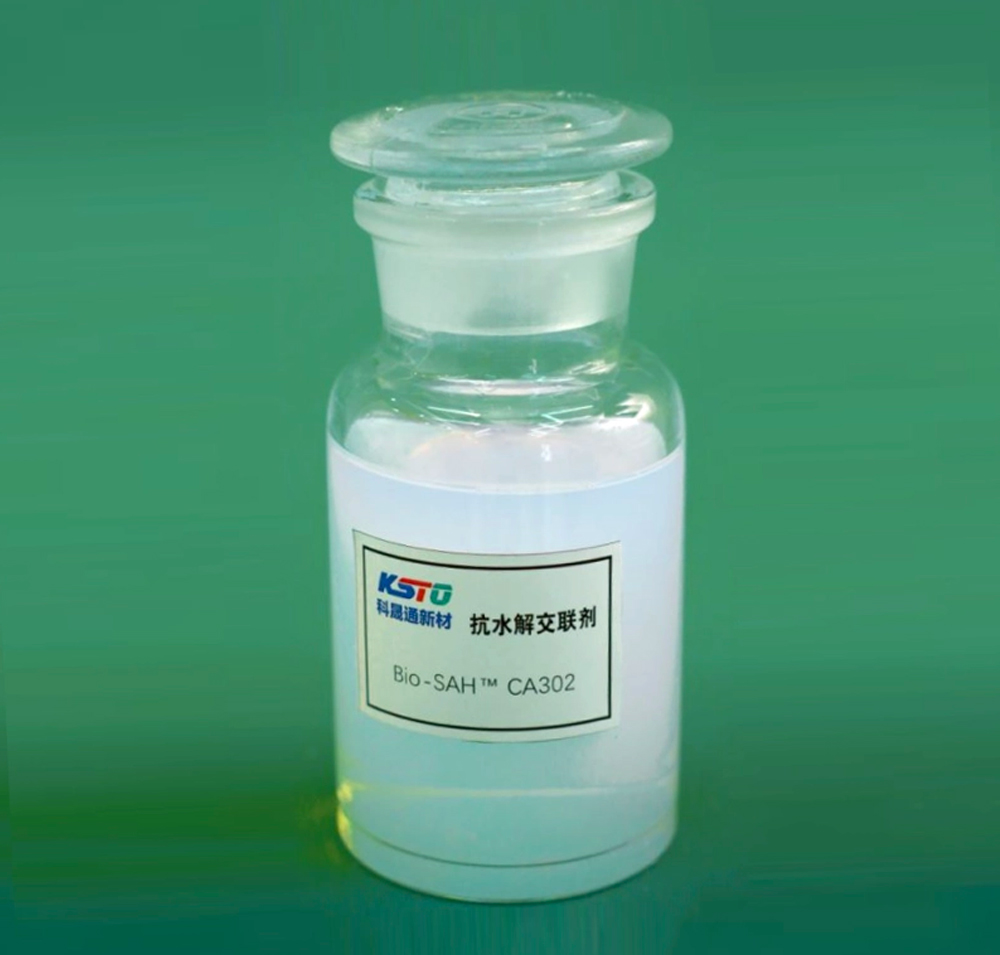
The verified Polymeric Carbodiimide Liquid is described as a moderate-viscosity liquid designed for integration into suitable polyols, emulsions, adhesives, coatings, PLA, and PBAT systems. A liquid polymeric Anti-Hydrolysis Agent may simplify metering in reactive or liquid-phase production, but formulators must still monitor viscosity changes, mixing efficiency, phase stability, and interactions with catalysts, pigments, plasticizers, and other additives. Lower volatility or migration should be treated as a grade-specific benefit that requires testing rather than as a universal property of every polymeric product.

The main distinction is not simply “fast” versus “durable.” Monomeric carbodiimide often reacts more quickly with accessible carboxyl groups, while polymeric carbodiimide may retain multiple reactive sites and remain in the material for a longer period. Molecular size also influences diffusion, extraction resistance, additive loss, and distribution within the polymer matrix. Nevertheless, actual behavior can vary considerably between grades, especially when different aromatic structures, active contents, carriers, or delivery forms are compared.
Factor | Monomeric Carbodiimide | Polymeric Carbodiimide |
|---|---|---|
Molecular structure | Smaller molecule | Larger structure with multiple reactive groups |
Reactivity | Often relatively rapid | Usually more controlled or gradual |
Migration concern | Requires careful evaluation | Often lower in compatible systems |
Volatility | May require attention at high temperatures | Often lower for suitable grades |
Long-term protection | Depends on remaining active material | May provide a reserve or depot effect |
Typical form | Powder, liquid, or masterbatch | Liquid, emulsion, or formulated masterbatch |
Primary selection focus | Rapid acid scavenging and stabilization | Durability, lower migration, and formulation compatibility |
A successful anti-hydrolysis agent selection process should therefore compare usable active content rather than nominal dosage alone. A low dosage of one grade cannot be judged against a higher dosage of another unless the concentration of reactive carbodiimide groups is understood. The form of the additive also matters because a well-dispersed masterbatch or compatible liquid may outperform a theoretically stronger product that agglomerates, evaporates, or reacts prematurely. Cost should be assessed against retained performance after aging, not only against additive price per kilogram.
Polymer chemistry determines where hydrolysis begins, how quickly acidic degradation products accumulate, and which physical properties fail first. Processing then determines whether the Anti-Hydrolysis Agent can be incorporated without excessive thermal loss or formulation instability. The following application groups require different priorities.
In PET and PBT, carboxyl end groups can contribute to autocatalytic hydrolysis, so efficient end-group control is an important selection objective. A monomeric carbodiimide may be suitable when rapid reaction during extrusion, spinning, film processing, or injection molding is required. A compatible masterbatch can improve feeding and distribution where direct powder handling is difficult. Polymeric alternatives deserve consideration when extraction resistance, migration, or retained protection during extended service is more important than maximum initial reaction speed.
Polyester-based TPU and PU contain hydrolysis-sensitive ester segments that may lose molecular weight and mechanical performance under humid heat. Monomeric carbodiimide can provide efficient stabilization where fast carboxyl-group reaction is needed, while polymeric liquid grades may fit PU prepolymers, synthetic-leather formulations, coatings, and adhesives. Compatibility should be checked against the polyol, isocyanate system, plasticizer, pigment, catalyst, and other additives. Testing should track both initial processability and tensile or elongation retention after humid aging.
PLA and PBAT are ester-containing biodegradable polymers, so moisture, residual acidity, drying quality, and processing history can strongly influence degradation. Carbodiimide additives can delay hydrolytic chain scission in PLA, but the effect varies with additive structure, loading, crystallinity, and test conditions. Monomeric grades may provide efficient acid control, while selected polymeric grades can offer longer-term stabilization. Because hydrolysis behavior can also influence the intended end-of-life profile, dosage must balance processing stability, useful service life, mechanical retention, and biodegradation-related requirements.
Moisture absorption in nylon can cause plasticization, dimensional change, and altered mechanical behavior even before severe chemical degradation occurs. At elevated temperatures and long exposure times, hydrolytic damage may become more significant, making processing stability and humid-aging retention relevant selection criteria. An Anti-Hydrolysis Agent must tolerate the nylon processing temperature and distribute without causing deposits, discoloration, or unacceptable viscosity changes. Testing should focus on tensile retention, impact performance, dimensions, surface appearance, and the difference between reversible moisture conditioning and permanent chain degradation.
Waterborne acrylic emulsions and polyurethane dispersions use different selection logic from melt-processed thermoplastics. A polymeric carbodiimide can react with carboxyl-functional resin components and form a more resistant network, so compatibility, pH, pot life, curing conditions, and film formation become central concerns. The verified Waterborne Carbodiimide Crosslinker is intended for waterborne polyurethane and acrylic systems. Relevant tests include water, chemical, abrasion, scratch, adhesion, transparency, flexibility, and formulation-storage evaluations.
Higher melt temperatures can increase the risk of additive evaporation, decomposition, odor, color change, or unwanted secondary reactions. Residence time is equally important because a moderate temperature maintained for too long may create more damage than a short controlled heat exposure. Monomeric and polymeric products should therefore be compared at the actual barrel profile, screw speed, throughput, pressure, and drying condition. Water-based coating systems require separate evaluation because their critical variables include mixing order, pH, film formation, curing temperature, and usable formulation life.
An Anti-Hydrolysis Agent intended for humid indoor use may not meet the demands of hot-water immersion, outdoor weathering, automotive heat, or continuous steam exposure. Footwear and flexible products prioritize elongation, softness, adhesion, and resistance to repeated wetting, whereas engineering components may prioritize dimensional stability and mechanical retention. Coatings and adhesives also require surface, chemical, and abrasion performance after aging. The test environment should reproduce the real combination of moisture, temperature, chemicals, stress, and exposure duration rather than relying on a single generic humidity test.
Begin with an unstabilized control produced under the same drying, compounding, and molding conditions as the treated samples. Where practical, compare equivalent active carbodiimide content rather than equal product weight, while also including realistic supplier-recommended dosage levels. Record feeding accuracy, dispersion, torque, melt pressure, viscosity, odor, color, deposits, and surface appearance during processing. Initial characterization may include tensile strength, elongation, impact performance, intrinsic viscosity, molecular weight, melt flow, adhesion, film clarity, or hardness, depending on the material.
Aging conditions should reflect the intended application and may include humid heat, hot water, pressure-cooker exposure, outdoor weathering, chemical immersion, or repeated wet-dry cycles. Measure retained properties at several intervals because two Anti-Hydrolysis Agent candidates may appear similar initially but diverge after prolonged exposure. Migration, extraction resistance, dimensional stability, and odor should be added when relevant to the final product. Replicate samples are necessary because apparent differences can result from moisture variation, inconsistent dispersion, specimen preparation, or normal test scatter.
One common mistake is assuming that monomeric carbodiimide is always superior because it reacts quickly. Rapid reaction cannot compensate for excessive volatility, poor thermal stability, migration, or incompatibility. The opposite assumption—that polymeric carbodiimide is automatically better because of its molecular size—is also unreliable. A polymeric grade can perform poorly when viscosity, dispersion, reaction rate, or resin compatibility does not fit the process.
Other mistakes include ignoring additive form, copying dosage from an unrelated polymer, and comparing products without correcting for active content. Initial mechanical properties alone provide little evidence of long-term protection, especially when hydrolysis develops slowly. Drying conditions, residence time, acid value, and other formulation components should remain controlled during comparisons. The most reliable anti-hydrolysis agent selection is based on balanced processing behavior and retained performance after relevant aging.
Monomeric and polymeric carbodiimide products can both function as an effective Anti-Hydrolysis Agent, but they address different processing and durability priorities. Monomeric structures often favor rapid acid scavenging, while polymeric structures may favor lower mobility, reduced volatility, and longer-term protection in compatible systems. Suzhou Ke Sheng Tong New Materials Technology Co., Ltd., a manufacturer and supplier of polymer additives, offers both structures in several delivery forms. Final selection should be based on polymer chemistry, production conditions, end-use exposure, and measurable property retention after realistic aging.
A: Monomeric carbodiimide has a smaller structure and often reacts faster, while polymeric carbodiimide has multiple reactive groups and may provide lower migration or longer-term protection.
A: It may suit PET when rapid carboxyl end-group control is needed, but processing temperature, volatility, dispersion, extraction resistance, and long-term aging requirements must also be evaluated.
A: Consider it when lower volatility, reduced migration, extraction resistance, long-term durability, or compatibility with liquid, coating, adhesive, or waterborne systems is a priority.
A: No. Compare active carbodiimide content, compatibility, processing stability, dispersion, initial properties, and retained performance after aging rather than relying only on product weight.
A: The answer depends on the individual grade, polymer, temperature profile, residence time, and ventilation. Production-scale thermal and processing trials are required before final selection.
A: Selected waterborne polymeric carbodiimides can crosslink carboxyl-functional acrylic or polyurethane systems, but pH, pot life, curing, film formation, and formulation stability require validation.
