

Views: 0 Author: Site Editor Publish Time: 2026-01-05 Origin: Site


Industrial coatings are essential in protecting surfaces across sectors — from construction and automotive to textiles and consumer goods. However, coatings are often challenged by long‑term exposure to moisture, heat, and harsh environmental conditions. This is where an Anti‑Hydrolysis Crosslinking Agent plays a transformative role. In this in‑depth article, we explore how the Anti‑Hydrolysis Crosslinking Agent enhances industrial coatings, backed by technical insights, product comparisons, and the latest industry trends.
The Anti‑Hydrolysis Crosslinking Agent has emerged as a pivotal additive for enhancing polymer coatings, significantly improving durability, chemical resistance, and lifespan under moisture stress. With growing demand for sustainable and high‑performance coatings worldwide, understanding this functional additive has become essential for formulators, manufacturers, and end‑users alike.
The Anti‑Hydrolysis Crosslinking Agent plays a crucial role in extending the durability and performance of industrial coatings exposed to moisture, chemicals, and mechanical stress.
Environmental trends are pushing the coatings industry toward waterborne and sustainable formulations, making advanced Anti‑Hydrolysis Crosslinking Agents more relevant than ever.
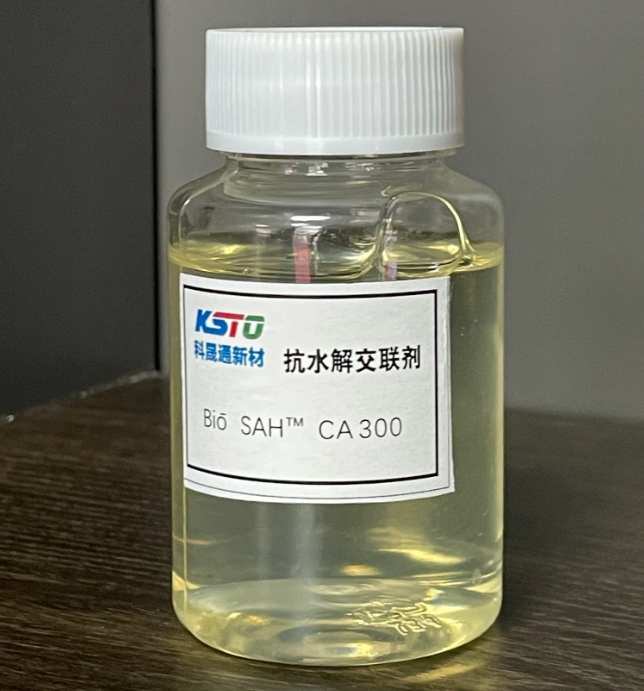
An Anti‑Hydrolysis Crosslinking Agent is a chemical additive designed to enhance the structural stability and performance of polymer matrices in industrial coatings. Its primary function is to prevent or slow hydrolysis — the chemical breakdown of polymers in the presence of water — and to strengthen the material through controlled crosslinking.
Hydrolysis occurs when moisture penetrates the coating and degrades ester or urethane bonds in polymers, leading to softening, cracking, or loss of mechanical integrity. The Anti‑Hydrolysis Crosslinking Agent reacts with hydrolyzable groups to form stable chemical networks, reducing this degradation and thereby extending the coating’s useful life.
One of the primary roles of an Anti‑Hydrolysis Crosslinking Agent is to inhibit hydrolytic degradation. By neutralizing groups formed during hydrolysis (such as carboxylic acids), it prevents cascade breakdown reactions within the polymer, thus maintaining mechanical strength and integrity.
When integrated into industrial coatings, the Anti‑Hydrolysis Crosslinking Agent substantially increases resistance to chemical attack. This is particularly important in environments with aggressive chemicals, solvents, or acid/base exposure.
The Anti‑Hydrolysis Crosslinking Agent helps create a crosslinked network that enhances adhesion to substrates like metal, wood, or polymers, resulting in improved abrasion resistance and reduced delamination.
Crosslinked coatings often show superior hardness, scratch resistance, and tensile strength compared to non‑crosslinked systems. The Anti‑Hydrolysis Crosslinking Agent enables such improvements by forming stable covalent bonds within the polymer matrix.
The Anti‑Hydrolysis Crosslinking Agent category encompasses various chemicals, primarily tailored for specific polymer systems:
| Crosslinking Agent Type | Common Chemistry | Key Functions | Applications |
|---|---|---|---|
| Carbodiimide‑based (e.g., polycarbodiimide) | Reactive N=C=N groups | Inhibits hydrolysis, improves mechanical properties | PU, acrylic coatings, waterborne systems |
| Blocked Isocyanates | Isocyanates with blocked reactivity | Controlled reactivity during heat cure, enhances durability | Industrial and automotive coatings |
| Epoxy‑based Crosslinkers | Epoxide functional groups | Strong chemical resistance and adhesion | High durability coatings |
| Polyfunctional Polyurethanes | Urethane reactive groups | Balanced flexibility and resistance | Flooring, protective coatings |
Anti‑Hydrolysis Crosslinking Agent enhances industrial coatings in measurable ways:
Studies show that coatings treated with an Anti‑Hydrolysis Crosslinking Agent maintain structural integrity under moisture conditions far longer than untreated coatings. This translates to fewer recoating cycles and lower maintenance costs, particularly in corrosive environments.
The crosslinked networks formed by the Anti‑Hydrolysis Crosslinking Agent reduce permeability, preventing water ingress — a key cause of coating degradation.
Crosslinking boosts surface hardness and resistance to wear, beneficial for industrial floors, heavy machinery, and high‑traffic surfaces.
Coatings with an Anti‑Hydrolysis Crosslinking Agent show improved resistance to solvents, acids, and alkalis — critical for chemical plants and industrial facilities.
Water‑based industrial coatings are increasingly popular due to lower VOC emissions and regulatory pressures for greener formulations. The Anti‑Hydrolysis Crosslinking Agent plays a key role in optimizing waterborne systems:
Facilitates Crosslinking without VOCs: Many Anti‑Hydrolysis Crosslinking Agent chemistries are compatible with aqueous systems, enabling high performance without traditional solvent‑based crosslinkers.
Enhances Durability in Waterborne Resins: Polycarbodiimide type anti‑hydrolysis agents are widely used in waterborne acrylic emulsions and polyurethane dispersions, improving hydrolysis resistance and adhesion.
Non‑Toxic and VOC‑Free: Certain formulations are non‑toxic and do not contribute to VOC loads, making them attractive for environmentally conscious coatings.
| Property | Without Agent | With Anti‑Hydrolysis Crosslinking Agent |
|---|---|---|
| Hydrolysis Resistance | Low to Moderate | High |
| Water Absorption | High | Low |
| Adhesion Strength | Moderate | High |
| Scratch Resistance | Moderate | High |
| Chemical Resistance | Limited | Significantly Improved |
| VOC Content (water‑based) | Lower environmental compliance | Comparable or better with optimized agents |
These trends reflect typical performance enhancements observed with the inclusion of effective anti‑hydrolysis crosslinkers.
Environmental regulations (e.g., VOC emission standards) are pushing formulators to adopt waterborne systems and eco‑friendly additives. Many new Anti‑Hydrolysis Crosslinking Agent chemistries are designed to meet these requirements without sacrificing performance.
Innovation in sustainable additives, including bio‑based carbodiimides and low‑toxicity crosslinkers, is emerging as manufacturers seek greener coatings solutions.
Combining Anti‑Hydrolysis Crosslinking Agent chemistry with nanomaterials (e.g., nanoparticle fillers or nanostructured surfaces) is showing promise for next‑generation coatings with multi‑functional performance.
At Suzhou Ke Sheng Tong New Materials Technology Co., Ltd., we offer advanced anti-hydrolysis crosslinking agents such as Antihydro® CA300 and Antihydro® CA302, dedicated to providing high-performance, durable polymer material solutions. These products are designed to enhance industrial coatings, particularly excelling in hydrolysis resistance, chemical resistance, and surface adhesion, helping users increase the longevity and reliability of their products.
| Product Model | Type | Primary Function |
|---|---|---|
| Antihydro® CA302 Anti‑hydrolysis Crosslinking Agent | Water‑based crosslinker | Provides robust hydrolysis resistance and enhances coating durability |
| Antihydro® CA300 Anti‑hydrolysis Crosslinking Agent | Polymeric carbodiimide‑based | Enhances hydrolysis, abrasion, and chemical resistance in waterborne systems |
Antihydro® CA300 is a polymeric carbodiimide water‑based Anti‑Hydrolysis Crosslinking Agent that significantly boosts hydrolysis resistance, chemical resistance, abrasion resistance, and surface adhesion when used in waterborne acrylic or polyurethane dispersions. It is suitable for industrial coatings on metal, wood, film, and other substrates and is non‑toxic and VOC‑free, making it an excellent alternative to traditional hazardous crosslinkers.
1. What is the difference between an anti‑hydrolysis agent and an Anti‑Hydrolysis Crosslinking Agent?
An anti‑hydrolysis agent generally protects polymers from moisture degradation, while an Anti‑Hydrolysis Crosslinking Agent also forms covalent bridges between polymer chains, enhancing mechanical and chemical resistance.
2. Can Anti‑Hydrolysis Crosslinking Agents be used in solvent‑free coatings?
Yes, many anti‑hydrolysis crosslinkers, especially water‑based carbodiimide types, are compatible with solvent‑free and low‑VOC coatings, enabling compliance with environmental standards.
3. How does the Anti‑Hydrolysis Crosslinking Agent enhance adhesion?
By forming strong chemical networks between the coating polymer and substrate surface, these agents improve wetting and bonding, leading to enhanced adhesion and reduced delamination.
4. Are Anti‑Hydrolysis Crosslinking Agents suitable for outdoor exposure?
Yes, due to improved hydrolysis and chemical resistance, coatings with these agents perform better under outdoor environmental stressors like humidity and temperature fluctuations.
5. How do waterborne Anti‑Hydrolysis Crosslinking Agents compare with traditional solvent‑based crosslinkers?
Waterborne agents, such as polycarbodiimide systems, offer similar or superior performance to solvent‑based crosslinkers while reducing VOC emissions and improving workplace safety.
