

Views: 0 Author: Site Editor Publish Time: 2026-08-18 Origin: Site


anti-hydrolysis masterbatch is widely used to improve processing stability and long-term hydrolysis resistance in moisture-sensitive thermoplastic materials. For polymers such as PET, TPU, PBT, PA, PC, and other engineering plastics, hydrolysis can cause viscosity loss, molecular weight reduction, brittleness, mechanical property decline, and shorter service life.
However, choosing an anti-hydrolysis masterbatch is not simply about adding a functional concentrate into the base resin. The carrier resin, active ingredient content, dispersion quality, processing temperature, drying condition, and final application must all be considered. Manufacturers therefore need to match the masterbatch to both polymer chemistry and actual production conditions before evaluating long-term performance.
Anti-hydrolysis masterbatch selection should start with polymer compatibility.
PET, TPU, and engineering plastics require different carrier resin and processing considerations.
Carrier resin compatibility is one of the most important selection factors.
Active ingredient content, let-down ratio, and final effective dosage must be calculated correctly.
Drying, dispersion, and processing temperature strongly affect final performance.
Aging tests should confirm whether the selected formulation works under the intended service conditions.
Different polymers do not fail in the same way when exposed to heat and moisture. PET selection normally emphasizes intrinsic viscosity (IV), melt viscosity, ester-bond degradation, carboxyl end groups, and mechanical retention. Polyester-based TPU may show hydrolysis through chain scission, reduced elongation, flexibility loss, or surface cracking. PA/Nylon adds another complication because moisture absorption itself can change dimensions and mechanical behavior.
This is why a carrier that works in one polymer cannot automatically be transferred to another. The carrier becomes part of the finished formulation and can influence dispersion, melt behavior, optical properties, mechanical properties, and processing. A PET TPU selection guide is useful for establishing the different evaluation priorities before masterbatch screening begins.
PET contains ester bonds that are sensitive to moisture, particularly when water exposure is combined with elevated temperature. Hydrolytic chain scission can reduce molecular weight and IV, followed by lower melt viscosity and weaker mechanical properties. Degradation during processing is especially important because residual moisture may damage the resin before the finished PET product even enters service.
Ester bond hydrolysis and molecular chain scission.
IV and melt viscosity loss.
Brittleness after thermal or humid aging.
Reduced tensile strength and elongation.
Processing degradation caused by the combination of heat and moisture.
A PET anti-hydrolysis masterbatch should use a carrier that integrates effectively with the target PET system. Buyers should compare the active carbodiimide content together with the intended let-down ratio rather than judging the concentrate by active content alone. Dispersion is particularly important for film, fiber, monofilament, and thin sections, where local additive concentration can create visible or mechanical inconsistencies.
Processing temperature stability, drying requirements, residence time, and the required appearance should also be included in the trial plan. PET film may prioritize haze, surface uniformity, gels, and tensile retention, while injection-molded components may place more emphasis on viscosity stability, toughness, and mechanical retention after aging.
KSTO’s PET masterbatch stabilizer, Bio-SAH™ MPET3613, is a PET-based monomeric carbodiimide anti-hydrolysis masterbatch intended for PET resin. Its role includes inhibiting mechanical performance degradation associated with hydrolysis, acid degradation, and processing while helping reduce viscosity decline during processing.

Relevant applications include PET film, BOPET film, sheet, packaging, injection-molded parts, engineering components, industrial fibers, and PET monofilament masterbatch applications. The correct test method should follow the product: optical quality matters more in transparent film, while tensile and elongation retention may be more important for fibers and monofilaments.
TPU selection should begin by identifying its chemistry. Polyester-based TPU is particularly relevant when evaluating TPU hydrolysis resistance because ester-containing soft segments can undergo hydrolytic chain scission. Failure may appear as lower tensile strength, loss of elongation and flexibility, surface cracking, or reduced durability in hot water, sweat, and humid environments.
A stabilizer should therefore be evaluated against the properties that make the TPU useful in the first place. Improving aging resistance while causing unacceptable hardness, color, transparency, or flexibility changes would not represent a successful formulation.
A TPU anti-hydrolysis masterbatch needs a carrier system compatible with the particular TPU formulation. The complete formulation matters: plasticizers, pigments, fillers, lubricants, flame retardants, and recycled material can change moisture conditions, dispersion, appearance, or additive interaction.
Processing temperature and residence time should also reproduce commercial production rather than only laboratory mixing. For transparent or light-colored TPU, color and clarity deserve separate evaluation. For flexible products, tensile and elongation retention should be measured before and after application-relevant aging instead of relying only on initial properties.
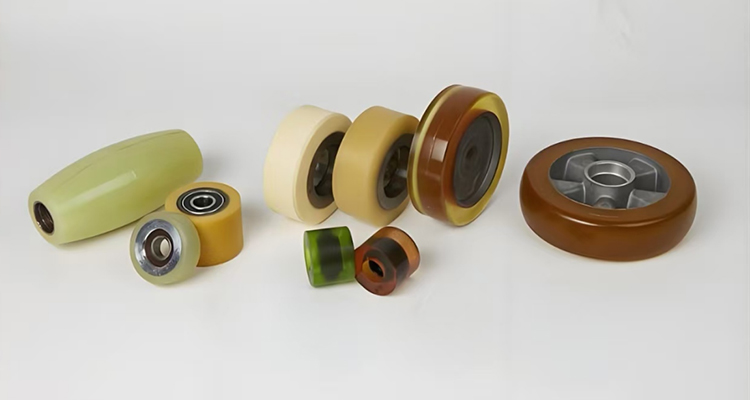
TPU film, pipe, sheet, footwear components, hoses, cable sheathing, seals, wheels, and molded parts can all face different moisture exposures. Hot-water contact may dominate one application, while another may experience warm humidity or repeated contact with sweat.
Improving TPU hydrolysis resistance is therefore not only a stabilizer-selection problem. Material chemistry, formulation design, moisture control, thermal history, and aging conditions should be treated as one system. Testing should reproduce the expected exposure closely enough to distinguish meaningful long-term differences between formulations.
Engineering plastics that may require hydrolysis evaluation include PBT, PA/Nylon, PC, PET engineering compounds, glass-fiber-reinforced materials, and flame-retardant compounds. A suitable engineering plastics hydrolysis stabilizer cannot be selected only from the resin family name because reinforcement, filler level, moisture absorption, additives, and processing temperature can substantially change formulation behavior.
The polymer application guide covers hydrolysis-sensitive systems including PET/PBT engineering plastics, PA/Nylon, TPU/PU, and PC, illustrating why polymer-specific evaluation is necessary.
Start with base-resin compatibility, then review the entire compound. Glass fiber and mineral fillers can influence melt flow, interfaces, surface finish, and moisture pathways. Flame retardants, pigments, heat stabilizers, impact modifiers, and other additives may introduce further compatibility or thermal-stability requirements.
Processing stability becomes especially important for engineering compounds running at higher melt temperatures. The masterbatch must disperse without creating unacceptable changes in mechanical properties, dimensions, appearance, or another required function. Humid-heat aging followed by retained-property measurements is generally more informative than comparing initial strength alone.
PA has relatively high water absorption, so normal moisture conditioning and irreversible degradation must be distinguished during testing. Absorbed moisture can affect dimensions, stiffness, strength, and impact behavior even before severe chain degradation becomes obvious.
An anti-hydrolysis strategy for PA should therefore use defined conditioning procedures and compare mechanical retention and dimensional stability under the same exposure history. Filled and reinforced grades require separate validation because their moisture response can differ from unfilled nylon.
Carrier compatibility is fundamental because the carrier does not disappear after dosing. A PET-compatible carrier is normally the logical starting point for a PET masterbatch stabilizer, while TPU formulations require TPU-compatible carrier logic. For PBT, PA, PC, and multi-component engineering compounds, compatibility should be confirmed rather than inferred from another polymer system.
The evaluation should include melt mixing, appearance, crystallization behavior where relevant, mechanical properties, and aging performance. A masterbatch that feeds easily but introduces haze, stiffness changes, surface defects, or poor interfacial behavior is not an appropriate choice.
Higher concentrate strength is not automatically better. Buyers should calculate the final effective level of active ingredient in the finished formulation:
Final active dosage = masterbatch addition rate × active ingredient fraction.
For example, a hypothetical masterbatch containing 15% active ingredient and used at a 5% let-down rate provides 0.75% active ingredient in the final compound. Comparing products only by masterbatch addition rate can therefore be misleading.
Build a dosage ladder that includes an unstabilized control and several practical dosage levels. Under-dosing may provide inadequate aging improvement, while excessive addition can increase formulation cost and may alter processing or other properties.
Good dispersion supports consistent stabilization across the part or film. It becomes especially critical in thin films, fibers, monofilaments, and thin-wall molded components. Poor distribution can contribute to gels, surface defects, optical variation, local overconcentration, or uneven aging performance.
Production trials should therefore record more than mechanical data. Surface appearance, melt pressure, strand quality, filtration behavior, color, and visual uniformity can reveal dispersion problems that a simple tensile test may miss.
The anti-hydrolysis masterbatch must tolerate the real processing window of the polymer system. Actual melt temperature, residence time, shear history, and repeated thermal exposure all matter. A formulation that performs in a short laboratory trial may behave differently during continuous extrusion or long molding cycles.
Color, odor, viscosity, surface appearance, melt pressure, and retained active performance should be monitored when the operating temperature approaches the practical limit of the additive system.
An anti-hydrolysis additive is not a substitute for moisture control. Base resin, masterbatch, fillers, recycled material, and other moisture-sensitive ingredients should be handled according to their applicable drying requirements before processing.
Storage should minimize moisture uptake, especially after packaging has been opened. During comparative trials, candidates should be processed at equivalent moisture conditions; otherwise a wetter formulation may appear to have poorer stabilization even when the underlying additive chemistry is not the primary cause.
Selection Factor | PET | TPU | Engineering Plastics |
|---|---|---|---|
Main concern | IV loss, viscosity decline | Flexibility and elongation loss | Mechanical and dimensional stability |
Carrier priority | PET-compatible | TPU-compatible | Resin-specific |
Key process | Film, fiber, extrusion, injection | Film, pipe, sheet, molding | Injection and compounding |
Main test | IV, tensile, elongation | Hot water aging, elongation | Humid heat, mechanical retention |
Main risk | Ester hydrolysis | Polyester TPU hydrolysis | Moisture and high heat |
Choosing only by price: the lowest concentrate cost does not show final active dosage, compatibility, or retained performance after aging.
Ignoring carrier resin compatibility: an unsuitable carrier can affect dispersion, appearance, flexibility, or mechanical properties.
Not calculating final active dosage: compare active ingredient delivered to the final compound, not only the masterbatch percentage.
Using PET masterbatch in non-PET systems without testing: similar hydrolysis problems do not guarantee carrier compatibility.
Skipping drying: residual moisture can accelerate degradation during processing and distort trial results.
Ignoring surface quality or transparency: films and clear products need optical and visual checks in addition to mechanical testing.
Testing initial properties only: anti-hydrolysis performance should be judged primarily through retained properties after relevant aging.
Choosing an anti-hydrolysis masterbatch for PET, TPU, and engineering plastics requires more than selecting a functional additive. Carrier compatibility, active content, dispersion, processing temperature, moisture control, final application, and realistic aging conditions all influence the result. PET systems generally emphasize IV and viscosity retention, TPU systems emphasize flexibility and hot-water or humid-aging resistance, and engineering plastics require resin-specific mechanical and dimensional evaluation. A structured process should begin with polymer compatibility and finish with controlled production trials and aging tests. Suzhou Ke Sheng Tong New Materials Technology Co., Ltd. is a manufacturer of polymer anti-hydrolysis products for these material systems.
Not automatically. PET and TPU have different polymer chemistry, melt behavior, mechanical priorities, and carrier requirements. A PET-based anti-hydrolysis masterbatch should not be transferred into TPU simply because both polymers can suffer hydrolysis. Carrier compatibility, processing conditions, appearance, mechanical properties, and aging performance should first be validated in the complete TPU formulation.
The carrier resin affects how the functional ingredient enters and disperses throughout the base polymer. It can also influence feeding stability, melt behavior, optical quality, crystallization, flexibility, and mechanical performance. Matching the carrier to the target resin reduces one major source of formulation incompatibility.
PET evaluations can include intrinsic viscosity, melt-viscosity behavior, tensile strength, elongation, surface appearance, and retained properties after humid-heat or other application-relevant aging. Film and sheet applications may also require checks for haze, gels, surface defects, and visual uniformity.
TPU trials should evaluate elongation retention, tensile properties, flexibility, hardness where relevant, hot-water aging, humid-heat aging, color, and surface appearance. Because initial results can conceal later hydrolysis damage, samples should be compared after aging intervals that represent the intended service environment.
Yes, provided the masterbatch is compatible with the specific resin and complete compound. PBT, PA, PC, reinforced PET, and other engineering plastics can have different processing temperatures, fillers, reinforcement levels, moisture responses, and additive packages. Compatibility and retained mechanical performance therefore need material-specific validation.
Start with the applicable product guidance, identify active ingredient content, and convert the masterbatch let-down rate into the final active dosage. Then create a dosage ladder with a control and several candidate levels. Process them under identical conditions and compare performance after relevant aging. The correct dosage is the lowest practical level that reaches the required retained performance without causing unacceptable processing or property changes.
